


Ever noticed how the same perfume smells amazing on someone else but not quite right on you? This perfume notes guide reveals why it is all in the fragrance notes and how they interact with your skin and environment.
Discover the true importance of base, middle, and top perfume notes and how they influence the character of your perfume. By the time it is all over, you will know which notes go well with your skin type, style, and time of year, making each spray worthwhile.
What Are Perfume Notes?
Perfume notes are the layers of fragrance that unfold over time after you apply it. The notes of a fragrance define its scent, from first to last. Each of the three stages of a scent is a unique part of its personality as the top, middle, and base notes.
Purpose of Perfume Notes
- Create depth and balance: Fragrance notes work together to form a complete and harmonious perfume composition.
- Control the scent’s evolution: From the fresh top notes you smell first to the warm base notes that last the longest.
- Reflect emotions and moods: Floral, woody, oriental, and citrus notes all have unique smell stories.
- Affect perfume longevity: The balance between top, middle, and base notes decides how long your perfume stays noticeable.
- Help you choose better perfumes: Knowing the notes helps you pick fragrances that match your style, skin, and season.
The Three Main Types of Perfume Notes
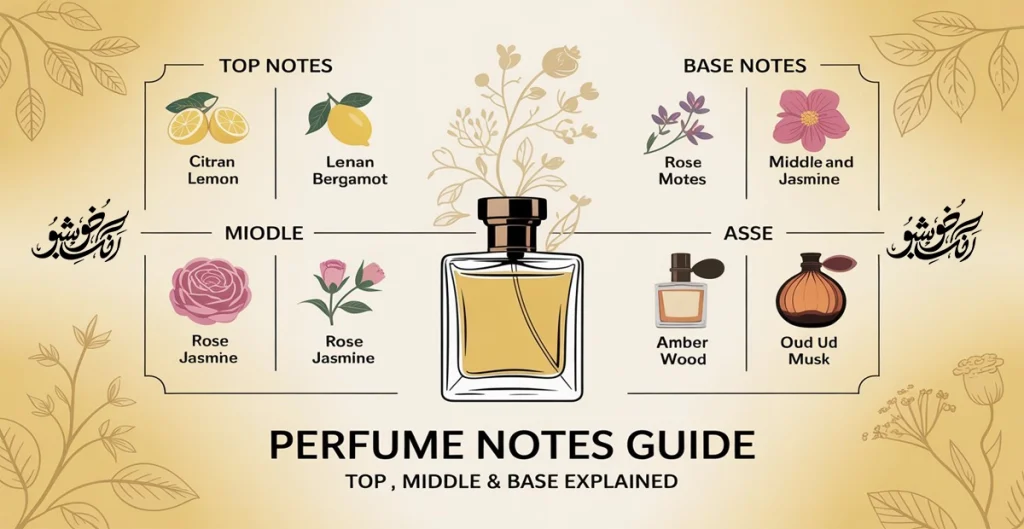
Perfumes start light, grow richer, and settle into something memorable. There are three layers of notes in perfume: Top Notes, Heart Notes, and Base Notes. Their combined scent forms your perfume.
Top Notes (First Impression)
Your first impression of a perfume is its top notes. A fresh, vibrant feel is created by them. Bright and short-lived, these notes usually last 15-30 minutes.
They are called the perfume top layer because they attract attention instantly and set the tone for what’s to come. The top fragrances are quick, refreshing, and inviting.
Examples: Lemon, bergamot, mint, lavender, and apple.
Heart Notes (The Core)
Once the top notes fade, the heart notes are also known as middle notes, start to bloom. These are the true core of the perfume, defining its character and personality. They often include floral, spicy, or green notes and last much longer around 3 to 5 hours.
Middle perfume notes connect the freshness of the top with the warmth of the base, giving balance and emotion to the fragrance.
Examples: Rose, jasmine, cinnamon, cardamom, and violet.
c. Base Notes (The Foundation)
The base notes, which are the basis of any long-lasting scent, come last. Once the lighter layers expire, these rich, deep scents become apparent and remain on your skin for at least 6 to 12 hours.
Typical elements of oud, musk, amber, or wood give the scent a long-lasting, sensual, and pleasant sense. The fragrance lingers brilliantly throughout the day thanks to the base notes, which give it depth, intensity, and longevity.
Examples: Sandalwood, vanilla, patchouli, musk, and amber.
How to Identify Perfume Notes in Your Fragrance
It requires some effort and the correct techniques to identify perfume notes. Here is a quick method:
- Start over: Before testing, clear your nose by taking in the aroma of fresh air or coffee.
- First, do a paper test: Use a blotter to detect the top notes of a perfume, such as citrus or herbs, which are light and fresh.
- Next, do a skin test: Your body heat and oils show how base and heart notes actually change over time.
- Examine in phases: It takes 0 to 15 minutes for the top notes, 20 to 90 minutes for the heart or middle notes, and more than three hours for the base sounds.
- Compare outcomes: A scent may smell differently on skin than on paper because your body chemistry influences the aroma.
- Observe your results: To describe each stage, use short terms like “flowery,” “woody,” or “sweet.”
Why “skin vs paper” matters
- Paper (blotter): Excellent for comparing top notes and making fast first impressions. It explains how a fragrance unfolds under neutral circumstances.
- Skin: reveals the entire life cycle of the perfume. The way molecules dissolve and combine is altered by body heat, lipids, and pH, so what you smell on paper might not be what others smell on you.
How body chemistry affects perfume notes
- Skin pH & natural oils: Can make citrus fade faster or enhance musks and woods.
- Diet & medications: Spicy foods, alcohol, or certain meds may slightly change how notes appear.
Hormones & stress: Pregnancy, menstrual cycles, and stress can alter scent perception temporarily. - Climate & humidity: Heavy foundation sounds are enhanced by cold weather, while dangerous top notes are brought out by hot weather.
Popular Perfume Notes and What They Mean
Each scent adds a unique mood, depth, and personality to the story it tells through its notes. Knowing the value of these perfume notes enables you to select fragrances that fit your style and the situation.
Floral Notes:
Many traditional perfumes are around floral notes. Rose, jasmine, peony, or lily are frequently used as important parts. These perfumes are ideal for those who enjoy delicate, feminine, and classic aromas because they are romantic, elegant, and reassuring. Floral fragrances are a natural appeal that never feels overpowering and they shine in spring or evening clothing.
Woody Notes:
Sandalwood, cedarwood, vetiver, and oud are examples of woody perfume notes that give a scent depth and structure. They are perfect for people who like strong, stylish, or unisex fragrances because they are warm, earthy, and deep. Woody notes frequently find their way into base layers to give perfumes lasting power and beauty.
Fresh Notes:
Lemon, bergamot, green tea, or mint are examples of fresh or citrus notes that add a bright and lively taste. They give a scent a fresh, energetic sense that makes it ideal for everyday use or hot, humid conditions. These fragrances produce a crisp, fresh impression, although they fade more quickly than woody or oriental flavours.
Oriental Notes:
Amber or oriental notes are rich, sweet, and exotic. They frequently combine amber, vanilla, resins, and spices like clove or cinnamon. Warmth and power are provided by these remaining perfume notes, making them ideal for cold weather or evening activities. Oriental scents are the ideal choice if you enjoy surprise and charm.
Fruity Notes:
A scent gains sweetness and fun from fruity notes. Apple, pear, peach, or berries are typical examples. They are bright, juicy, and frequently combined with fresh or flowery layers to provide lively, youthful scents. Fruity fragrances are ideal for people who like cheerful and carefree perfumes.
How Perfume Notes Affect Longevity and Sillage
The longevity, or how long a fragrance lasts and how far its scent goes, is determined by the balance of perfume notes. Strong foundation notes, such as amber, oud, musk, or sandalwood, tend to remain the longest since they anchor lighter notes and fade slowly. Concentration is also important:
- Parfum (Extrait de Parfum): Highest oil content, most long-lasting.
- Eau de Parfum (EDP): Balanced strength with noticeable sillage.
- Eau de Toilette (EDT): Lighter and fades faster, ideal for daily wear.
Pro tip: Match your perfume notes with the climate — warm, heavy notes like amber or oud suit winter, while fresh or citrus notes stay pleasant in summer.
Perfume Notes by Season and Occasion
|
Season / Occasion |
Recommended Perfume Notes |
Scent Character |
Best For |
|---|---|---|---|
|
Summer |
Citrus, Lemon, Bergamot, Aquatic, Green Notes |
Light, refreshing, energizing |
Daywear, outdoor activities, hot weather |
|
Winter |
Amber, Oud, Vanilla, Musk, Woody Notes |
Warm, deep, comforting |
Nightwear, parties, cold climates |
|
Spring |
Floral, Peony, Rose, Jasmine, Fruity Notes |
Soft, romantic, uplifting |
Daily wear, casual outings |
|
Autumn |
Spicy, Leather, Patchouli, Sandalwood |
Earthy, rich, cozy |
Evenings, formal gatherings |
|
Daytime Perfumes |
Fresh, Green, Floral, Fruity |
Subtle, clean, elegant |
Work, school, everyday use |
|
Nighttime Perfumes |
Oud, Amber, Vanilla, Oriental Notes |
Bold, sensual, long-lasting |
Dinners, dates, events |
Perfume Layering & Custom Scent Building
Combining two or more fragrances to create your own signature aroma is known as perfume layering. Perfume notes must be balanced to mix rather than fight.
Tips for Perfect Layering:
- Start Light: Add deeper components like woody or musk after starting with a light floral or citrus perfume.
- Families that Match: Combine scents from related note families, such as floral and woody or vanilla and amber.
- Put in Order: A milder scent should be sprayed first, followed by a richer one to allow notes to develop organically.
- Avoid Overpowering Mixes: Combining two strong scents might throw off the balance and sillage.
Perfume Notes and Personality Matching Guide
|
Personality Type / Mood |
Recommended Perfume Notes |
Scent Feel & Impression |
|---|---|---|
|
Confident & Bold |
Woody, Leather, Amber |
Long-lasting, strong, and powerful; ideal for leadership energy. |
|
Calm & Gentle |
Floral, Powdery, White Musk |
Soft, soothing, and elegant, it is ideal for peaceful personalities. |
|
Romantic & Dreamy |
Rose, Vanilla, Jasmine |
Sweet and emotional, as it adds charm and warmth to your aura. |
|
Fresh & Energetic |
Citrus, Green Tea, Mint |
Refreshing, clean, and lively, so it is great for casual wear or summer moods. |
|
Mysterious & Deep |
Oud, Patchouli, Spices |
Rich and exotic and best for those who love making a bold impression. |
|
Creative & Free-Spirited |
Fruity, Aquatic, Floral-Woody |
Playful and modern, it suits artistic, adventurous souls. |
Conclusion
Finding a fragrance that truly suits your mood, season, and personality requires an understanding of perfume notes, which is not limited to professionals. This perfume notes guide has guided you through every step of the scent journey, from base, top, and heart notes to combining strategies and long-lasting fragrance advice.
You can now identify the unique and lasting attributes of each scent, regardless of your preference for floral, woody, oriental, or fresh notes. Recall that perfume is a representation of your identity rather than just a scent. To create a perfume story that is all your own, fearlessly explore, test, and match your fragrance notes.