
Women’s perfumes differ in two main ways: how concentrated they are and which scent family they belong to. Once you understand both, it becomes much easier to pick a fragrance for yourself or to choose one as a gift.
This guide explains each perfume type in plain words, then shows how to match a scent to the occasion, the season and the person.
In this article7 sections
Types of Women’s Perfumes by Concentration
Concentration means how much fragrance oil is in the bottle. In general, a higher concentration gives a stronger scent that stays on the skin for longer. The percentages and wear times below are typical ranges; they vary by brand, skin type and weather.
Parfum (about 20-30% fragrance oil)
Parfum, also called extrait, is the richest and most intense type. A small amount goes a long way, which makes it a good choice for weddings, anniversaries and other big occasions. It is usually the most expensive version of a fragrance.
Eau de Parfum (EDP, about 15-20%)
EDP is strong without being overpowering, and it is the most popular strength for women’s perfume. It works well for evening events, mehndi nights and Eid, and many women also wear it to work with a lighter hand.
Eau de Toilette (EDT, about 5-15%)
EDT is lighter and fresher, so it suits daily wear, office use and Pakistan’s warm months. Expect to reapply it during a long day.
Eau de Cologne (EDC, about 2-5%)
EDC is very light and fades quickly. It is best as a quick refresh on hot, humid days rather than as your main fragrance.
Body Mist (about 1-5%)
Body mists are the lightest and most affordable option. They are fun for casual use and for younger wearers, but they need frequent reapplying.
Alcohol-Free Perfume Oils
Labels like EDP and EDT describe alcohol-based sprays. Alcohol-free, oil-based perfumes work differently: the fragrance sits in an oil instead of alcohol, so it stays closer to the skin and is not graded by those labels. At Rang-e-Khushboo all our perfumes are alcohol-free and oil-based, and our FAQ puts their longevity at approximately 8-10 hours, depending on skin type, weather and how much you apply. Read more in our guide to non-alcoholic perfumes in Pakistan.
Types of Perfume: Quick Overview
| Perfume Type | Typical Oil % | Best For | Good to Know |
| Parfum | 20-30% | Weddings, anniversaries | Most intense; apply sparingly |
| Eau de Parfum | 15-20% | Eid, evening events, mehndi | Popular all-rounder |
| Eau de Toilette | 5-15% | Daily wear, office, casual | Light; reapply during the day |
| Eau de Cologne | 2-5% | Hot days, quick refresh | Fades quickly |
| Body Mist | 1-5% | Casual, young wearers | Lightest and most affordable |
| Perfume oil (alcohol-free) | Oil-based, no alcohol | Daily wear and occasions | Stays close to the skin |
Fragrance Families: Match the Scent to the Person
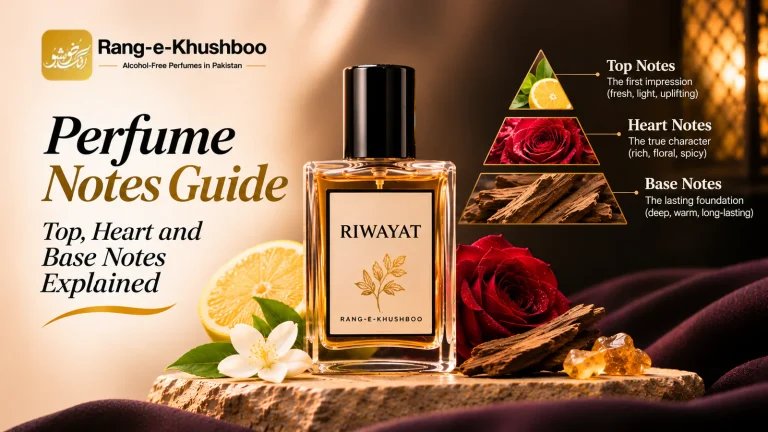
The second way to sort women’s perfumes is by fragrance family. Every perfume also unfolds in three stages: top notes (the first impression), middle or heart notes, and base notes (what lingers). Our perfume notes guide explains these layers in more detail.
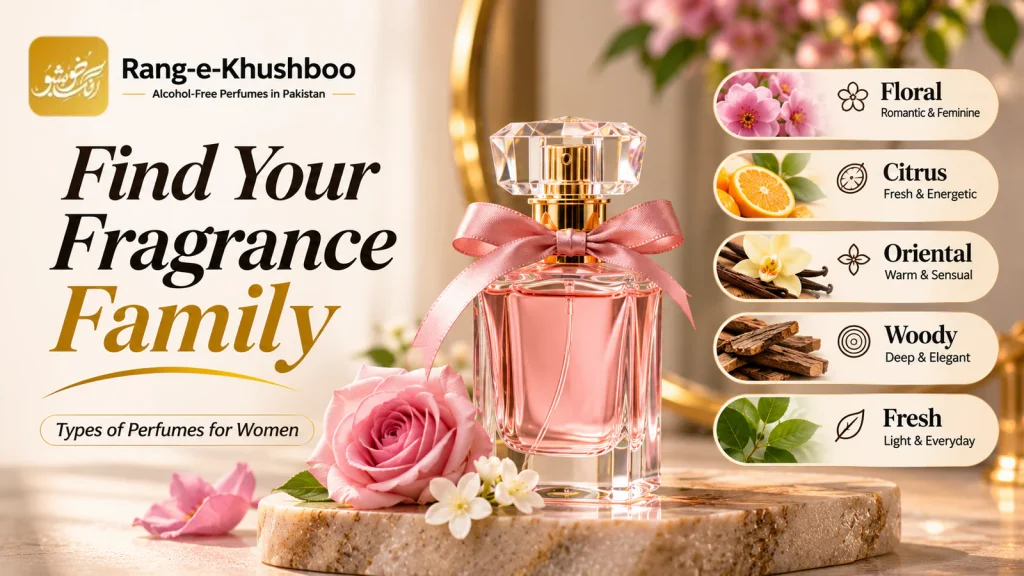
- Floral: rose, jasmine, peony and other flowers. Romantic and feminine, and the most popular family for women.
- Oriental (amber): warm notes such as vanilla, amber, spices and oud. Rich and noticeable, ideal for evenings, weddings and winter.
- Fresh and citrus: lemon, bergamot, green and watery notes. Light and clean, a natural fit for summer and daytime.
- Fruity: berries, pear, peach and other fruits. Sweet, playful and easy to like.
- Woody and chypre: sandalwood, patchouli and mossy notes. Polished and grown-up, often worn by women who prefer a less sweet scent.
Many perfumes mix two families, for example a floral scent with a woody base. When in doubt, check the listed top, heart and base notes.
Why Different Women Prefer Different Perfumes
A perfume reflects mood and personality. A student may enjoy a light, fresh scent for college, while someone heading to a wedding may want something warm and rich. Neither is better; they simply suit different moments.
Climate matters too. In Pakistan’s heat and humidity, light florals and fresh scents feel comfortable during the day, while warmer oriental and oud scents come into their own at night, in winter and at festive events.
How to Choose a Perfume for Yourself or as a Gift
Whether you are buying for yourself or for your wife, sister or a friend, these points will narrow the choice quickly:
- Occasion: a light floral or fresh scent for daily wear and office; a richer EDP-strength or oriental scent for Eid and weddings.
- Season: fresh and watery scents for summer; warm vanilla, amber and oud scents for winter.
- Skin type: scents often last longer on moisturised skin. If her skin is dry, a little unscented moisturiser before applying helps.
- Personality: florals for romantic tastes, fruity scents for a playful style, warm and spicy scents for a bold one.
- Application: apply to pulse points such as the wrists and neck, and keep the bottle in a cool, dark place.
- Not sure what she likes? A set of small testers lets her try several scents before committing to a full bottle. For more gifting ideas, read our guide to the best perfume for a gift.
From our collection: Try a fresh daytime scent like Crystal, or browse all women’s perfumes. Undecided? The Discovery Set lets you pick any 5 perfumes as 5ML testers.
FAQs About Types of Perfumes for Women
What are the main types of perfumes for women?
By strength: Parfum, Eau de Parfum, Eau de Toilette, Eau de Cologne and body mist, plus alcohol-free perfume oils. By scent: floral, oriental, fresh, fruity and woody.
What are the three stages of a perfume’s scent?
Top notes are the first impression (often citrus), heart notes form the main character (often florals), and base notes such as vanilla, musk or woods last the longest.
Which type of perfume lasts the longest?
Among alcohol-based sprays, Parfum usually lasts longest, followed by EDP and EDT. Actual wear time depends on the formula, your skin and the weather.
Which perfume type is best for Pakistan’s hot weather?
Light floral, fresh and citrus scents feel most comfortable in summer heat. Apply a little less than you would in winter.
Conclusion
Choosing a women’s perfume comes down to two questions: how strong should it be, and which scent family suits her? Pick a lighter floral or fresh scent for everyday wear and a richer, warmer one for special occasions.
If you are shopping for him as well, see our guide to types of perfumes for men.